
Find Your Career In Finance

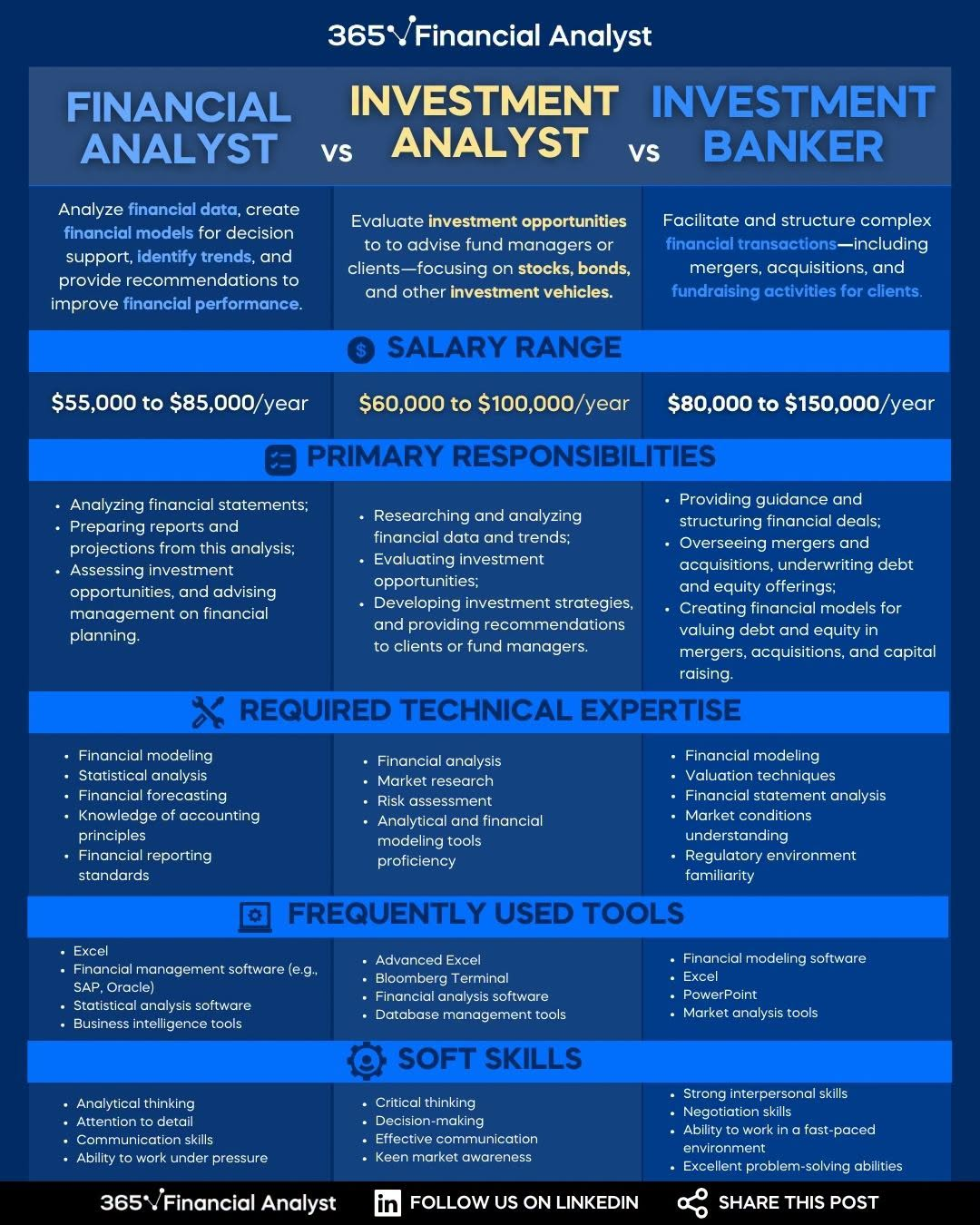
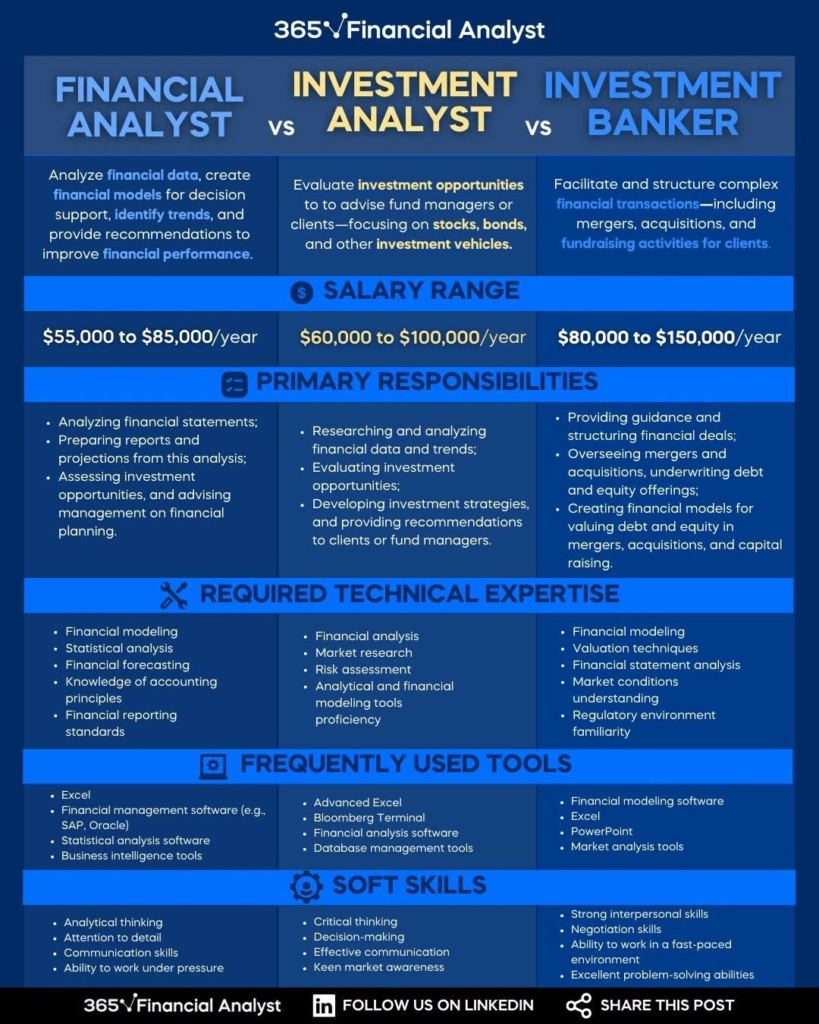
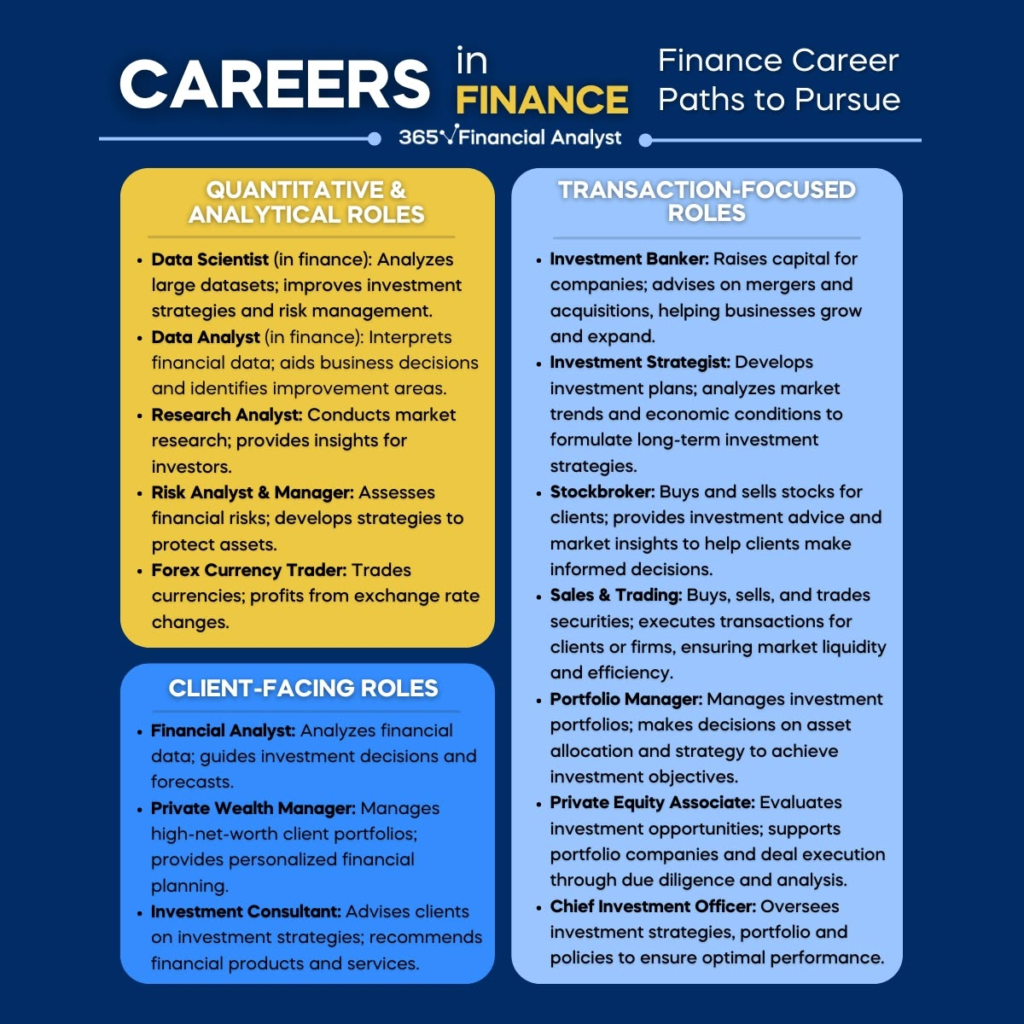
Which career path is right for you? I’d settle that before spending a cent on any course, because a career in finance covers very different jobs. A corporate finance analyst lives in budgets and forecasts. An investment analyst researches stocks and bonds. An investment banker structures deals for companies. Each leans on a different slice of the same toolkit, so the financial analyst skills you build first should depend on where you want to end up.
This guide breaks down the skills required to be a financial analyst, and how the online finance courses at 365 Financial Analyst line up with them.
See Analyst Skills Required
Strip away the job titles and the financial analyst skills required come down to four things: reading financial statements, building models in Excel, judging a business with ratios and valuation, and explaining what you found to someone who doesn’t have time for the spreadsheet.
Nobody expects a new graduate to be an expert. The realistic bar is smaller: open a company’s accounts, work out how it makes money, and say something sensible about it. Most of what follows is a way of getting to that point.

Learn Skills Step By Step
The classic beginner mistake is opening ten tabs, watching a little of everything and finishing nothing. A better method is to pick one role and follow one path to the end.
365 groups its catalog into three tracks, and they map closely onto three jobs.
Financial analyst (10 courses, 338 lessons). The corporate finance route. It starts with Introduction to Excel (83 lessons), then Accounting and Financial Statement Analysis, Fundamentals of Financial Reporting, Building a 3-Statement Model in Excel, FP&A: Building a Company’s Budget, and Financial Ratio Analysis.
Investment analyst (10 courses, 464 lessons). The markets route. Math for Finance (40 lessons) leads into Corporate Finance, Discounted Cash Flow Valuation, Fundamentals of Financial Markets, Portfolio Management and Fixed Income Investments.
Investment banking (10 courses, 408 lessons). The same Excel and accounting base, followed by Corporate Finance, DCF, Multiples Valuation and LBO Modeling in Excel (50 lessons).
All three finish with Who Does What in Finance, a short 9-lesson course. If you’re still choosing a direction, take it first.
Master Math For Finance
If I had to name what separates a prepared junior from an unprepared one, it would be this: can you build a three-statement model, and can you explain what it tells you?
That takes three layers. Math for finance gives you the basics, such as growth rates, percentages and the time value of money, so numbers stop feeling intimidating. Financial statement analysis teaches you to read the balance sheet, income statement and cash flow statement as one connected story. Financial ratio analysis then turns that story into judgment: is this business liquid, profitable and able to pay its debts?
Software comes after the fundamentals, not before. Excel is the one tool every finance team assumes you know. Other tools help later, and 365’s own project descriptions mention Excel, Tableau and Python.
Build Soft Skills Too
Technical skills get you the interview. Soft skills decide whether you keep getting promoted.
An analyst’s day is mostly turning numbers into a recommendation someone else can act on. That means explaining a forecast to a busy manager, spotting the one assumption that doesn’t hold up, and staying calm when a deadline moves. A course can’t fully teach this, so treat every project as practice for presenting it.
Know Before You Enroll
Self-paced learning only works if you keep showing up. With hundreds of lessons in a track, the hard part is consistency, not content, so set a weekly schedule before you start. Before paying, click through a few lessons and check that the platform runs smoothly on your device.
A certificate also won’t replace a degree or a credential like the CFA. What it shows is initiative, and it works best next to something you can talk about in an interview, such as a model you built yourself.
Find Your Fit As An Analyst
University students. You have the theory and need practical skills before applying for entry-level roles.
Career changers. You’re coming from a non-finance background and need Excel, accounting and valuation basics fast.
Working analysts. You already do the job and want to fill gaps or move toward a different role.

Start Online Finance Courses
Decide which of the three roles fits you best.
Begin with Excel. It appears in all three tracks, so the time is never wasted.
Work through your track in order rather than jumping between courses.
Check the current offer on the merchant page before you check out.
Get Quick Answers
Which career path is right for you in finance?
It depends on how you like to work. Financial analysts build models and reports that guide decisions inside a company. Investment analysts research stocks, bonds and other investments to advise fund managers or clients. Investment bankers structure mergers, acquisitions and fundraising for companies, usually with the longest hours. If you enjoy budgeting and forecasting, start with the financial analyst route. If markets fascinate you, look at investment analysis.
What financial analyst skills are most important for beginners?
Accounting fundamentals, Excel and basic quantitative math. Get comfortable with financial statement analysis first, because everything else, from ratios to valuation, builds on being able to read the numbers.
Are self-paced online finance certificates worth it?
They are worth it as proof you finish what you start, but not as a replacement for a degree or a credential like the CFA. A certificate paired with a project you can explain tends to carry more weight than the certificate alone.
Build Analyst Skills Today
The skills required to be a financial analyst aren’t a mystery. They’re accounting, Excel, a feel for ratios and valuation, and the ability to communicate clearly. Pick the track that matches the job you want, follow it in order, and build one real project along the way. Then check the current plan options at 365 Financial Analyst and start with the first course.